You have an organ you almost never think about, and it weighs about as much as your brain. It isn’t made of your cells at all — it’s the community of trillions of microbes living in your gut. Over the last twenty years, scientists have gone from treating these bugs as passengers to seeing them as something closer to a control panel for your health. This is the story of what they do for you, where they come from, and why we think the way food is grown — our moringa, our vegetables, our pork — reaches all the way to your insides.
What your gut microbiome does for you
It’s worth pausing on how new this understanding is. For most of the last century these microbes were nearly invisible to science: the overwhelming majority can’t be grown in a lab dish, so they simply couldn’t be counted or studied. That only changed when DNA sequencing became cheap enough to take a full census of the gut — right around the time the U.S. National Institutes of Health launched its Human Microbiome Project in 2007. The findings came fast, and research has exploded since. What that flood of studies keeps finding is that your gut microbes earn their keep, in at least four ways the science now backs strongly.
They train your immune system. Your gut is where your body meets the outside world most closely, and a surprisingly large share of your body’s immune cells are stationed right there in the gut wall. Your immune system does much of its schooling there too — the microbes act like an ongoing tutor, teaching it what to tolerate and what to attack.
They calm inflammation. When your gut bacteria digest the fiber in plants, they produce a compound called butyrate — the main fuel your gut lining burns. Butyrate helps seal the gut wall and turns inflammation down. This is the quiet engine under the whole story: feed these microbes plant fiber, and they pay you back in an anti-inflammatory currency.
They help run your metabolism. Those same compounds influence how your body handles blood sugar and fat. In one small pilot trial, giving overweight, insulin-resistant volunteers a specific gut microbe improved their insulin sensitivity by about 30% over three months — an early, small study, but the kind that has the field paying attention.
And they talk to your brain. In a study of more than a thousand people, the bacteria that make butyrate were linked to better quality of life and were in shorter supply in people with depression. That’s a correlation, not proof, but the gut-brain link has become one of the hottest areas in the field.
So how would you even know whether the ecosystem inside you is thriving? The best single gauge scientists have found is its diversity — the sheer variety of species living there, and how evenly they’re balanced. Picture a rainforest versus a mowed lawn: the rainforest is crowded and varied and hard to knock off balance; the lawn is one thing, and one bad day can wipe it out. A varied gut is “a generally good indicator of a healthy gut”, and its absence keeps turning up in illness — thinner, less varied communities show up in people with conditions as different as inflammatory bowel disease, diabetes, obesity, eczema, and celiac disease. In one study, the people with the least diverse guts carried more body fat, more insulin resistance, and more inflammation than everyone else. Part of why variety protects you is wonderfully simple: a crowded, diverse community starves out invading germs by eating up the food they’d need.
Diversity, in other words, is the scorecard. Which raises the real question: where does a diverse gut come from?
Where a diverse gut comes from — mostly your plate
Here’s the encouraging part: your gut community isn’t fixed. It’s built — and rebuilt — largely by how you eat. When researchers compared over a thousand people, more than a fifth of the differences between their gut microbiomes traced to diet and lifestyle, while their genes played only a minor role. You inherited your eye color. You’re building your microbiome every day, mostly with your fork.
Start with the food itself, which is far from sterile. When researchers actually counted, they found we swallow around 100 million bacterial cells with a single apple — and how the apple was grown changed which bacteria came along for the ride. Organic apples carried a more diverse, more balanced microbial community than conventional ones; roughly 40% of the bacterial types differed between the two. Conventional fruit more often carried Escherichia-Shigella (a group that includes some troublemakers), while organic fruit carried Lactobacillus, the beneficial group behind many probiotics. The way food is farmed writes itself into the microbes you eat.
And those food-borne microbes don’t just pass straight through. When scientists went looking, they found produce-associated bacteria showing up in people’s guts — a small but consistent share, and one that grew the more, and the more varied, the vegetables a person ate. Diet moves the needle fast, too: change what you eat and the gut community can shift within days.
Soil microbes really can take up residence in us and change how we work — when researchers enriched children’s daycare play-yards with biodiverse soil, the children’s own gut microbes and immune markers shifted within a single month. Most of us, though, meet those soil microbes a simpler way: at the dinner table.
I’ll be straight about the state of the science, because the researchers are. No one has yet traced the entire chain — this exact microbe, from that soil, through the plant, into your gut — end to end; the leading review calls the complete picture “still largely circumstantial and hypothetical”. But the pieces that matter are already on the table: food is alive with microbes, how it’s grown changes them, what you eat is the single biggest lever on the ecosystem inside you, and soil-borne microbes can reshape that ecosystem once they reach it. In 2024 the U.S. National Academies of Sciences published its first major report calling for exactly this research to be pushed further.
Which brings us back to the soil
If the microbes on your food matter, then how that food is grown matters — because farming decides what’s alive in the ground, and on the plant, to begin with.
Here the evidence is solid. Pooling 56 studies, researchers found that organically managed soils hold dramatically more microbial life than conventional ones — on the order of 40 to 60% more microbial mass, and even more of some microbial activity. More life in the ground means a richer reservoir for the plant to draw on — and, as the apples show, a richer mix of microbes on the food that reaches you.
Organic is a real step up. We go further still. Korean Natural Farming layers on practices that each, on their own, are tied to richer soil life. We actively brew beneficial microbes gathered from our own forest floor and feed them to the ground — and adding microbial life to soil has been shown to raise its overall microbial biomass. We disturb the soil as little as possible, because plowing shreds the fungal networks that hold a soil community together; going no-till raises soil microbial mass by roughly a third. And we use no pesticides at all — not even the copper-based fungicides that certified-organic farming still permits, which have been shown to lower soil microbial and fungal life and to harm nitrogen-fixing bacteria. No single study pits our exact method against organic head-to-head, but each of these choices, on its own, points the same way: more life in the soil.
That richness shows up in the food. When crops are grown with beneficial soil microbes, studies have measured more fiber in onions and corn, more vitamins in tomatoes, and more protective compounds in eggplant. Living soil doesn’t just carry more microbes — it helps grow more nourishing food.
The contrast is the modern shortcut. Roundup (the weed killer glyphosate) works by jamming a chemical pathway that plants and many microbes share, which makes it an antimicrobial as well as a herbicide, and it can knock back beneficial gut microbes along with the weeds. The direct human-gut evidence there is still early, mostly from animal and lab work — a reason for measured concern, not alarm. The larger point is simpler: a farming system built on synthetic inputs tends to grow less biologically diverse soil, and a plant is only as microbially rich as the ground it came from.
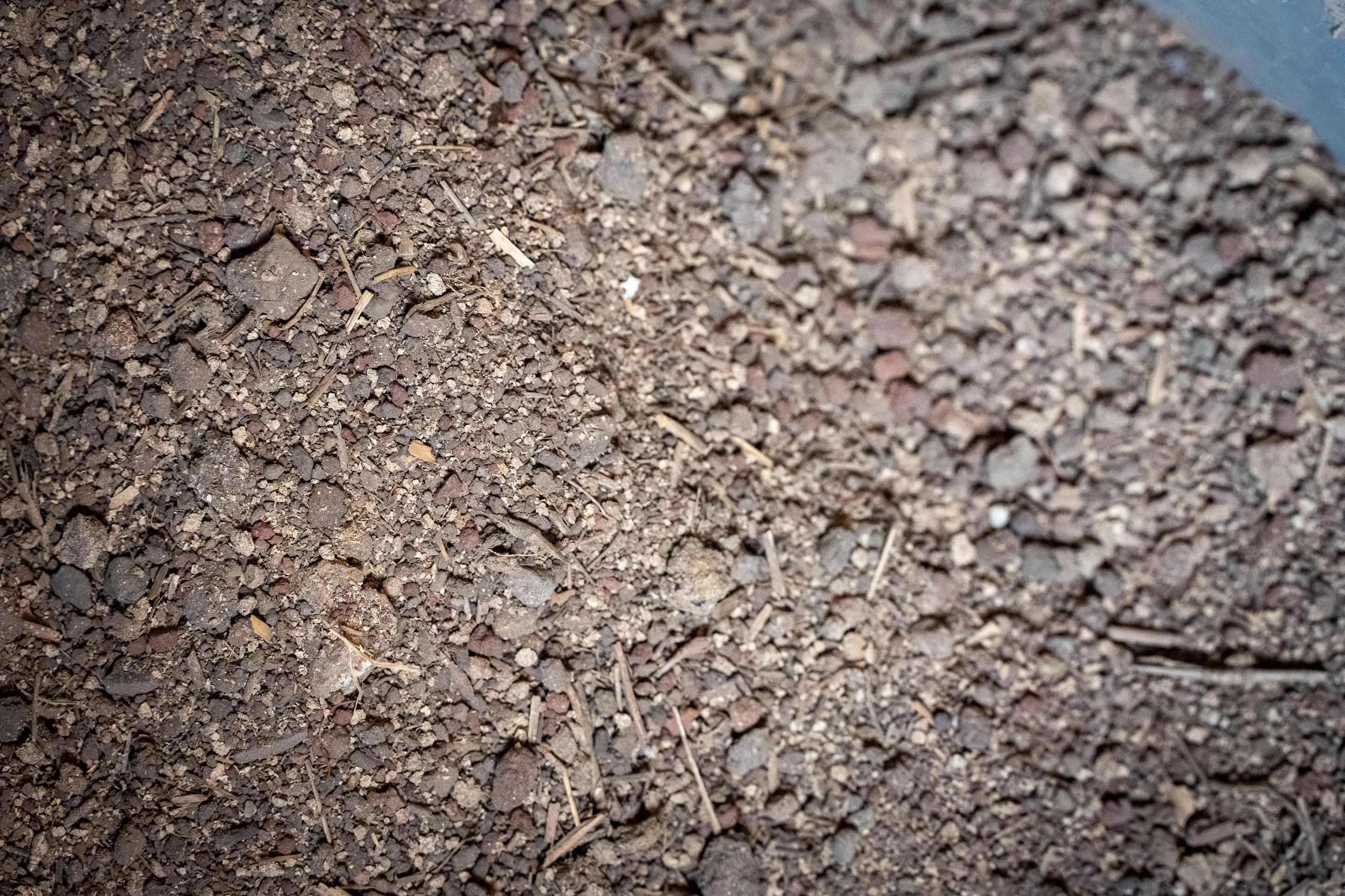
None of this is a new idea to us — it’s the whole premise of how we farm. That living-systems thinking runs through everything we raise: the moringa and the vegetables draw from that living ground, and our pigs live in open pens built on the same principle rather than in the sterile, medicated confinement of industrial pork. Our soil isn’t inert dirt. It’s a living community that has adapted to this specific piece of land, and every handful holds billions of organisms.
One practical question we get: do any of these microbes survive being turned into food you can store? For the hardiest ones, yes — and it’s genuinely clever. Certain beneficial bacteria wrap themselves into tough, dormant capsules (spores) when conditions get harsh, like seeds waiting for spring. Those spores shrug off drying and even survive the acid of your stomach, then wake up once they reach the gut. It’s the same durability behind the “soil-based” probiotics sold on store shelves.
The bottom line
The science here is young, and I’ve tried to be clear about which parts are rock-solid and which are still being assembled. But the direction is consistent and, honestly, a little beautiful: healthier soil grows food that carries more — and more varied — beneficial microbes, and a varied microbial community is one of the most reliable signatures of a healthy body we know of. Modern life has been thinning that community out for a century. Food grown in living soil is one way to feed it back.
That’s why we farm the way we do. Whether it’s our moringa, our vegetables, or our pork, we’re not just growing food — we’re growing it in a living system, and the research is finally starting to explain why that reaches all the way to you.
This is the science behind how we farm. For the full method, see our guide to Korean Natural Farming — and for what the research says about our flagship crop, read Moringa: What the Science Actually Says.