The Simplest Way to Explain KNF
Here’s the basic idea: instead of buying fertilizers and pesticides from a chemical company, a KNF farmer makes everything the farm needs from natural materials already on the land. Microorganisms collected from the forest floor. Fermented juice from fast-growing plant tips. Calcium dissolved from eggshells. Lactic acid bacteria cultured from rice wash water — the same family of bacteria that makes kimchi and yogurt.
Each of these inputs targets a specific stage of the plant’s life — some are applied to the soil, others sprayed directly on the leaves. The shift is from synthetic chemicals to natural, biological inputs. No pesticides. No synthetic fertilizers. No chemical residues.
If that sounds too simple, it might help to think of it this way: conventional farming is like feeding a person nothing but vitamin pills — you can keep them alive, but you’re bypassing the digestive system that’s supposed to do the work. KNF is like feeding them real food and letting the body process it naturally. The farmer’s job isn’t to force-feed the plant; it’s to build a living soil ecosystem that makes nutrients available on the plant’s own terms.
This article explains the history, philosophy, and practice of KNF — what it is and why it works.
Where KNF Came From — And Where It Fits
Korean Natural Farming was developed by Cho Han-Kyu, born in 1935 in Suwon, South Korea. After finishing high school at 29 while working the family farm, Cho traveled to Japan to study natural farming methods under three masters: Miyozo Yamagashi, Kinshi Shibata, and Yasushi Oinoue. What he brought back to Korea was more than technique — it was a way of thinking about the relationship between farmer, soil, and plant.
In the 1960s, Cho began fusing what he’d learned in Japan with Korea’s centuries-old fermentation traditions — the same cultural knowledge behind kimchi, doenjang, and gochujang. The insight was that fermentation, already central to Korean food culture, could become the foundation of a farming system. Instead of purchasing synthetic inputs, a farmer could ferment locally available materials — plant tips, fish scraps, rice, eggshells — into targeted biological amendments. Over his lifetime, Cho trained more than 18,000 farmers through his research institute, spread KNF to over 30 countries, and authored several foundational texts including CHO’s Global Natural Farming.
KNF isn’t the only farming system built on these principles. It belongs to a broader family of regenerative approaches — farming methods that aim to rebuild soil health rather than mine it. Biodynamic farming, developed by Rudolf Steiner in the 1920s, also uses fermented preparations and treats the farm as a living system, though it’s rooted in a spiritual-agricultural philosophy that KNF doesn’t share. Masanobu Fukuoka’s “do-nothing” farming in Japan influenced Cho’s thinking, but where Fukuoka emphasized minimal intervention as a worldview, KNF is more systematic — it offers a defined set of inputs and a stage-based nutritive cycle. What makes KNF distinct within this family is its emphasis on indigenous microorganisms collected from your own land, its fermentation-based input system, and its practical specificity. It’s regenerative farming with a recipe book.
The system remained largely confined to Asia until the mid-2000s, when Dr. Hoon Park — a retired pediatrician from Hilo who had been doing missionary work in South Korea — witnessed odorless piggeries managed entirely through indigenous microorganisms. He brought the concept back to Hawaii.
Mike DuPonte, an extension agent at the University of Hawaii’s College of Tropical Agriculture and Human Resources (CTAHR), began formal trials of KNF’s Inoculated Deep Litter System on local farms. His research led to a watershed moment: on November 15, 2012, the Natural Resources Conservation Service (NRCS) officially recognized the Inoculated Deep Litter System as a cost-sharable Best Management Practice. That federal approval meant KNF wasn’t just an alternative practice anymore — it was eligible for government cost-sharing and recognized as compliant with EPA livestock regulations.
Today, Hawaii is home to a number of KNF piggery systems, with Mountain View Farms managing approximately 800 pigs using KNF methods alone. The system has spread to the Philippines, Thailand, India, and dozens of other countries — a testament to its adaptability and low barrier to entry.
The Philosophy: How KNF Thinks About Farming
At its core, KNF rests on a single idea: the farm already has most of what it needs. The farmer’s job is to observe, collect, and amplify — not to override natural systems with purchased inputs.
This starts with the microorganisms. Every piece of land hosts billions of bacteria, fungi, and yeasts that have evolved under that specific soil, climate, and ecosystem. KNF says these indigenous microbes — the ones already adapted to your conditions — are more effective than anything you could buy from a laboratory or have shipped from somewhere else. So instead of purchasing microbial inoculants, a KNF farmer collects them from the richest biological site on the property: usually a forest floor or an undisturbed patch of land where organic matter has been decomposing for years.
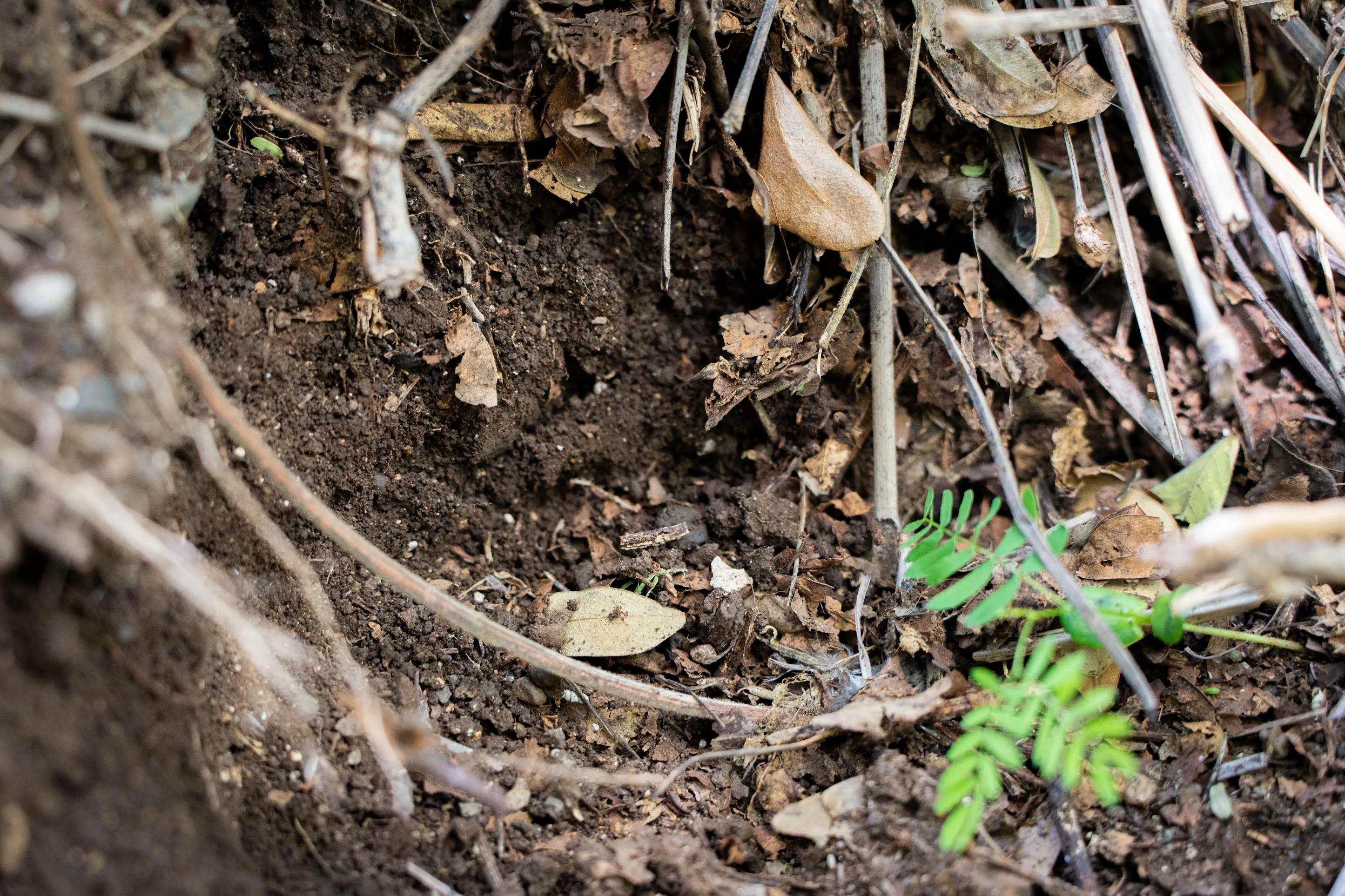
The second principle is that soil health comes first. Conventional fertilizers deliver synthetic nutrients directly to the plant — fast, efficient, and effective in the short term. But over time, this approach starves the soil food web. The bacteria and fungi that would normally cycle nutrients have nothing to work on, so their populations crash. The soil becomes biologically dead. The farmer has to apply more fertilizer each year because the soil can no longer supply anything on its own. KNF prioritizes building the microbial community in the soil, which in turn makes nutrients available to the plant naturally. Some KNF inputs go into the soil; others — like fermented plant juice — are sprayed directly on the leaves as foliar feeds. But the foundation is always a living, biologically active soil.
The third principle — and the one that separates KNF from simpler natural farming approaches — is the Nutritive Cycle Theory. This is the idea that a plant needs different nutrition at different growth stages, and the farmer’s job is to read those stages and respond. Think of it through a yin-yang lens: vegetative growth (building leaves and stems) is expansive energy — the plant needs nitrogen and growth hormones. Reproductive growth (flowering and fruiting) is concentrating energy — the plant needs calcium, phosphorus, and potassium. The transition between the two — the changeover period when the first flowers appear — is the most critical moment, and getting the nutrition wrong at that point can delay or prevent fruiting entirely. A KNF farmer watches for these signals and shifts inputs accordingly, rather than applying the same fertilizer all season.
Running through all of this is a commitment to diversity and observation. Monoculture weakens soil biology; polyculture strengthens it. And the farmer’s first response to any issue isn’t to reach for a product — it’s to observe the plant, read the signals, and intervene only with what the situation actually calls for.
What KNF Looks Like in Practice
A KNF farm doesn’t look like a chemistry lab. It looks like a kitchen.
The process starts in the forest. The farmer takes a box of plain cooked rice to an undisturbed area — a patch of forest floor, a thick compost pile, anywhere with rich biological activity — and leaves it for a few days. When they come back, the rice is covered in white-grey fuzzy mycelium — the same kinds of fungi that build forest soil. If it smells like a forest floor, sweet and earthy, the collection worked. That colonized rice is the starting point: Indigenous Microorganisms, or IMO.
The farmer preserves those microbes by mixing the colonized rice with brown sugar, which puts them into dormancy. This preserved culture — shelf-stable for months or even years — can later be expanded through rice bran and soil into hundreds of pounds of living inoculant, enough to colonize an entire field. The math is remarkable: one cup of rice can eventually inoculate a quarter-acre of topsoil, because unlike chemical fertilizer that gets used up, microbes reproduce.
The other inputs follow a similar logic. Fermented Plant Juice (FPJ) is made from the tips of fast-growing plants — sweet potato shoots, mugwort, comfrey — harvested before dawn when the plant’s sugars are most concentrated, then fermented with brown sugar for about a week. It’s rich in natural growth hormones and used during the vegetative stage when the plant is building leaves and stems. Fish Amino Acid (FAA) is fermented fish scraps — a nitrogen-rich amendment that also supports vegetative growth. Fermented Fruit Juice (FFJ) is made from ripe or overripe fruit and supplies phosphorus and potassium for the flowering and fruiting stages. Water-Soluble Calcium (WCA) is eggshells dissolved in vinegar — bioavailable calcium for fruit development. Lactic Acid Bacteria (LAB) is cultured from rice wash water, producing the same beneficial bacteria found in kimchi and yogurt. And Oriental Herbal Nutrient (OHN) is an alcohol tincture of garlic, ginger, cinnamon, and other herbs that supports the plant’s immune system throughout its life.
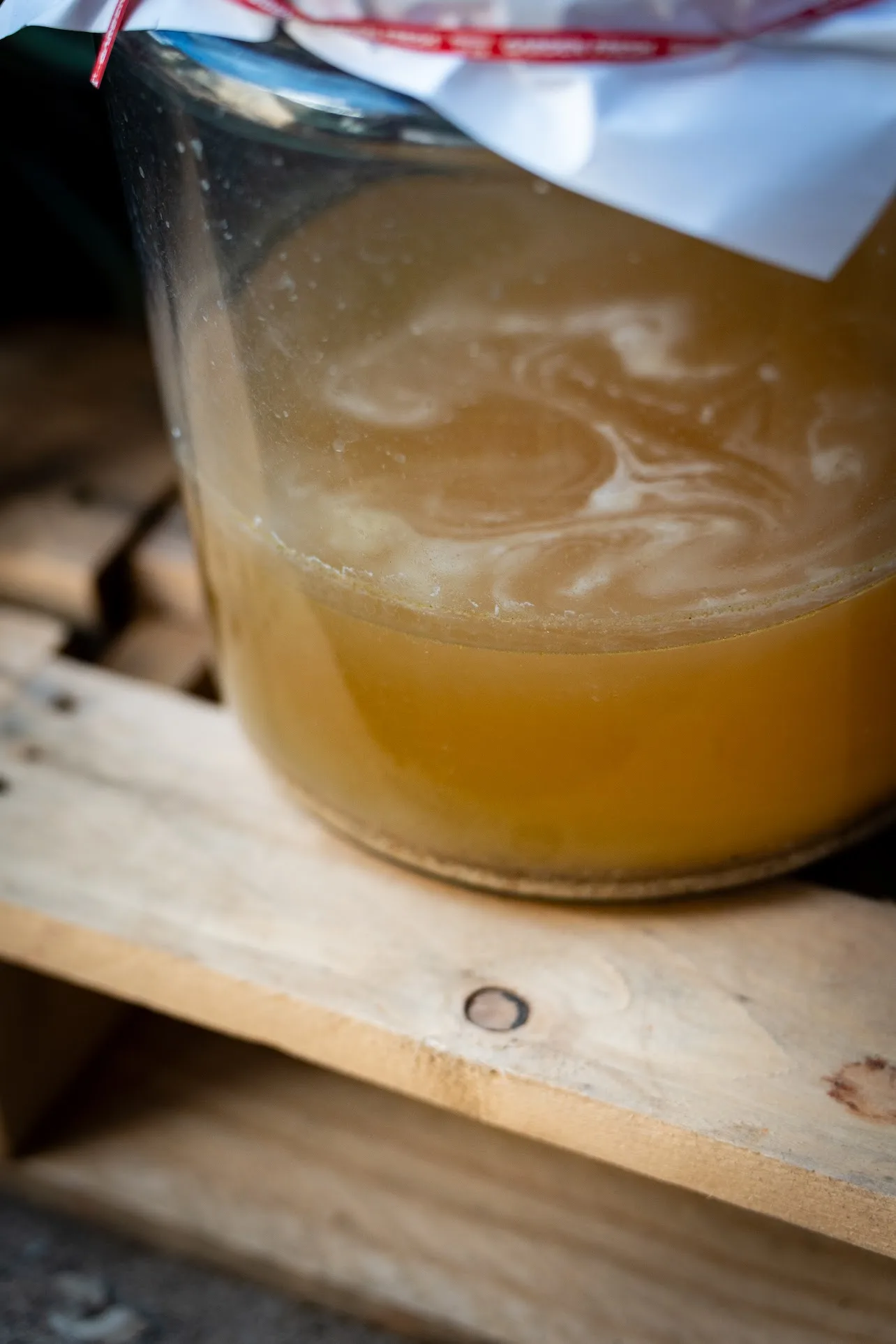
Each of these costs a few dollars per batch. Most of the raw materials are free — foraged plant tips, fish scraps from a processor, eggshells from the kitchen, rice water from cooking. The farmer trades purchased inputs for knowledge and a little labor. A batch of FPJ takes about seven days of passive fermentation. OHN needs a month. IMO collection takes less than a week. The most expensive input is time and attention — learning to read the plant, knowing which stage it’s in, and choosing the right input for that moment.
Why It Works: The Soil Biology Story
To understand why KNF produces the results it does, you need to understand what’s happening underground.
Healthy soil is a community. Bacteria break down organic matter and cycle nitrogen. Fungi decompose complex materials and form networks with plant roots — mycorrhizal connections that extend the plant’s reach far beyond its own root system. Protozoa graze on bacteria and release plant-available nitrogen in the process. Nematodes, arthropods, and earthworms all play roles in this web of nutrient cycling. When this community is diverse and active, plants grow with minimal external help because the soil organisms are constantly making nutrients available.
Conventional farming short-circuits this system. Synthetic fertilizers feed the plant directly, bypassing the soil food web entirely. In the short term, the plant gets a boost. In the long term, the microbial community has nothing to eat — no organic matter, no carbon — and it collapses. Salt accumulates. The soil becomes biologically inert. The farmer needs more fertilizer each year because the soil can no longer do the work it evolved to do. Pest problems compound because there’s no biological resistance left in the system. It’s a treadmill that accelerates.
KNF reverses this trajectory. The indigenous microorganisms reintroduce locally adapted biology. The fermented inputs — already partially broken down — feed the microbial community directly. No-till practices preserve the fungal networks that form underground. Diverse planting creates a wider range of ecological niches for different microbial communities.
The science supports this approach. A 2017 meta-analysis by Lori et al., published in PLOS ONE, examined 56 peer-reviewed studies comparing biologically managed farming systems to conventional ones. The results were striking: organic and biological systems showed 32–84% greater microbial biomass and enzymatic activity than conventional systems. Microbial biomass carbon was 41% higher. Nitrogen-cycling activity was 51% higher. These aren’t marginal differences — they represent a fundamentally different biological state in the soil.
The timeline matters, though. KNF isn’t an overnight fix. After the first year of application, you may not see dramatic yield changes — the soil biology is still rebuilding. By year two, as microbial populations establish themselves, yields improve noticeably and pest pressure drops. By year three and beyond, the system becomes largely self-sustaining. Input costs decrease because the biology is doing most of the work. This is the opposite of the conventional trajectory, where costs escalate year after year.
What’s remarkable about all this — beyond the soil itself — is what doesn’t happen. No synthetic fertilizer is manufactured to feed those soil microbes. No nitrate runs off into groundwater. No diesel-powered tilling pass releases the carbon the biology just spent a year storing. We cover that broader environmental ledger separately in How Natural Farming Heals the Land, Air, and Sea — emissions, water, and soil carbon, with peer-reviewed numbers.
What It Means for the Food — And for You
Here’s where KNF moves beyond farming philosophy and into something that directly affects the person eating the food.
To understand why, it helps to know what’s happening inside your own body. Your gut is home to trillions of microorganisms — bacteria, fungi, and other microbes — collectively known as the gut microbiome. This isn’t just a passive collection of organisms along for the ride. Research over the past decade has established that the gut microbiome plays a central role in immune function, metabolism, and even mental health. A comprehensive 2024 review in World Journal of Gastroenterology documented how metabolites produced by gut microbes influence the immune system, cardiovascular health, metabolic function, and the gut-brain axis — the biochemical signaling pathway between the digestive system and the brain. When microbial diversity declines or the community becomes imbalanced, the downstream effects can include increased inflammation, impaired nutrient absorption, and disrupted immune regulation. In short: the health of your gut microbiome matters enormously for your overall health.
Which raises a question worth asking: does the way food is grown affect the microbes that end up in your gut?
The connection between soil health and food quality isn’t just intuitive — it’s becoming measurable. The National Academies of Sciences published a report in 2024, Exploring Linkages Between Soil Health and Human Health, that examined how farming practices affect the nutritional and microbial quality of food. The report acknowledged a direct relationship between soil management and what ends up in the food supply, and called for expanded research into the mechanisms involved. This isn’t fringe science; it’s the National Academies saying the link is real and worth investigating at scale.
One pathway that’s getting particular attention is the soil-gut axis — the idea that microorganisms travel from soil to plant to the human digestive system. A 2025 paper in Nature Communications by Ma, Cornadó, and Raaijmakers mapped this pathway directly, confirming that the same bacterial families appear in soil, on plants, and in the human gut. The researchers distinguished between specialist microbes (adapted to one habitat) and generalist microbes distributed across all three environments — establishing that the connection isn’t incidental. It’s a biological pipeline.
Some of these microbes are remarkably durable. Soil bacteria like Bacillus species form endospores — dormant capsules that survive harsh conditions, including drying and stomach acid. Research published in Applied and Environmental Microbiology demonstrated that these spores germinate in significant numbers in the small intestine, suggesting they can reactivate and contribute to gut microbial communities after being consumed on food.
What does this mean practically? Vegetables grown in biologically active KNF soil — soil teeming with diverse microbial communities — may carry beneficial microorganisms that conventional produce, grown in biologically depleted soil, does not. Add to that the absence of chemical residues, the higher nutrient density that comes from healthy soil biology, and the more complex flavor profiles that chefs consistently notice in KNF-grown produce, and the picture becomes compelling.
We want to be clear about where the science stands. The soil-gut pathway is established. The mechanisms are plausible and increasingly documented. But large-scale human outcome studies — the kind that would let us say definitively “KNF-grown food improves gut health” — haven’t been published yet. The evidence is promising, not proven. We think that distinction matters, and we’d rather be straight about it than oversell. What we can say is that the direction of the research is consistent with what natural farmers have observed for decades: healthier soil produces healthier food, and the biology in that soil is part of the reason why.
For a deeper look at the soil-to-gut connection as it relates to moringa specifically, our article Moringa: What the Science Actually Says covers the pathway in more detail. And for how KNF-grown produce performs in professional kitchens, Why Hawaii’s Best Restaurants Choose Local tells that story from the chef’s perspective.
KNF at Mountain View Farms
We chose Korean Natural Farming because it matched how we wanted to grow. Not as a marketing angle — as a philosophy about what farming should be.
Our farm sits in Waianae Valley on Oahu’s west side, and Hawaii’s tropical climate turns out to be ideal for KNF. The consistent warmth means fermentation happens quickly and microbial activity never stops. We can collect IMO from forest environments year-round. The abundant tropical vegetation provides more source material for fermented inputs than we could ever use. And the long growing season lets us run continuous plantings, which means we’re always observing plants at every growth stage — exactly the kind of attention KNF rewards.
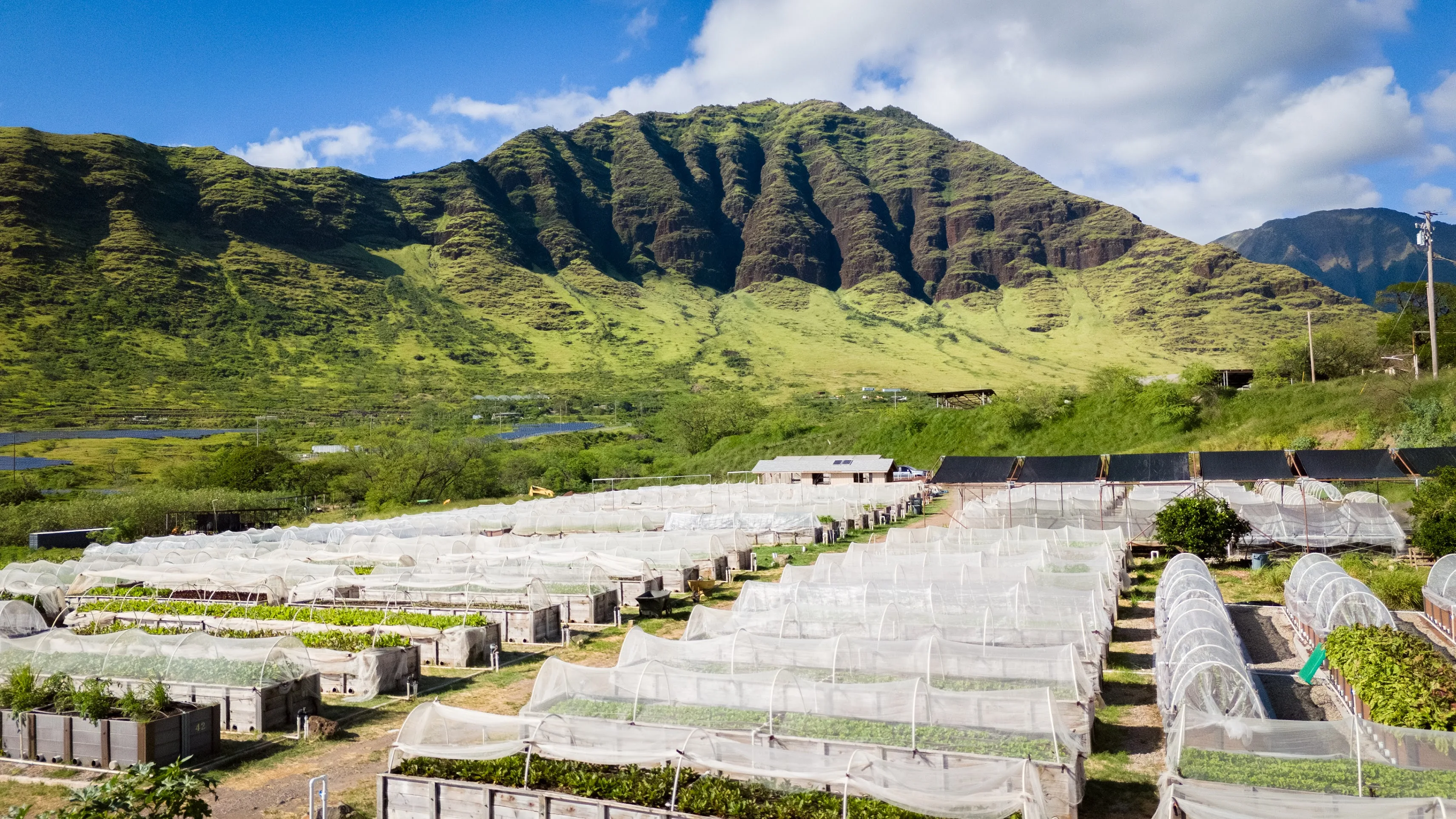
We run two operations side by side — vegetables and pigs — and KNF is what ties them together.
On the vegetable side, we grow a diverse array of crops — Manoa lettuce, Dino kale, Romaine, broccolini, beets, bell pepper, herbs, moringa, turmeric, and more. Zero synthetic chemicals. Living soil. Fermented inputs made on-site from materials we collect or forage. The same IMO, LAB, and fermented plant juices that form the backbone of KNF go directly into our growing beds and onto our crops.
On the pig side, approximately 800 animals are managed using the Inoculated Deep Litter System — KNF’s approach to livestock. In a conventional operation that size, you’re dealing with daily pen cleaning, waste hauling, and serious odor problems. Our system uses none of that. The deep litter — a thick bed of carbonaceous material inoculated with indigenous microorganisms — processes waste aerobically, right in the pen. No odor. No wastewater running off into the environment. No chemical treatments. The microbes do the work.
What makes this powerful is how the two operations reinforce each other. Moringa trimmings, vegetable stems, and surplus produce feed the pigs — high-quality forage, grown without chemicals, that would otherwise be waste. And the same microbial toolkit — IMO, LAB, fermented plant juices — serves both sides of the farm, keeping the vegetable soil alive and the deep litter beds active. One set of biological inputs, cultured on-site, doing the work that two separate operations would normally need to purchase. That integration is KNF at its most practical — not just a philosophy, but a working farm where each side makes the other stronger.
The results show up in the food. The chefs who source from us — at restaurants like FÊTE, Alan Wong’s, Merriman’s, MW Restaurant, The Pig & The Lady, and others — tell us they can taste the difference. The produce holds its texture and flavor longer. The colors are more vivid. The flavor is more concentrated. We believe that starts in the soil, with the biology we’ve spent years building. KNF gave us the framework to do that. The rest is showing up every day and paying attention.
Sources
History & Biography
Academic & Extension Research
- Lori, M. et al. (2017). Organic farming enhances soil microbial abundance and activity — PLOS ONE 12(7):e0180442
- CTAHR: Development of Indigenous Microorganisms (SA-19)
- Natural Farming: Fermented Plant Juice — CTAHR (SA-7)
- The Natural Farming Concept: Economical Waste Management for Small Family Swine Farms — LPELC
Soil-Gut Axis & Human Health
- Update on the gut microbiome in health and diseases — World Journal of Gastroenterology (2024)
- Ma, H., Cornadó, D. & Raaijmakers, J.M. (2025). The soil-plant-human gut microbiome axis — Nature Communications
- Exploring Linkages Between Soil Health and Human Health — National Academies (2024)
- Bacillus Spore Germination in the Gastrointestinal Tract — Applied and Environmental Microbiology (2002)