A question I get asked at the market all the time: are the chemicals on our food actually dangerous? The honest answer is that it depends — on the chemical, the amount, and, for some of them, who you ask.
But here’s the short version up front. For a few of these chemicals the evidence of harm is genuinely strong; for others it’s still being argued over. Either way, the stakes run all the way to cancer and children’s brain development — and that’s a gamble we’d rather not take with your food, so we’ve built our farm to use none of it. Let me walk through the reasoning: where the science is solid, where it isn’t, and what you can do about it either way.
Are the pesticides on our food actually dangerous?
First, a quick word on the word. Pesticide is the umbrella term — it covers weed killers (herbicides), bug killers (insecticides), fungicides, and the rest. This piece focuses on the two most likely to end up on your plate: herbicides like Roundup, and the insecticides sprayed on food crops.
Start with the most common one. Glyphosate — the active ingredient in Roundup — is the most heavily used herbicide in the country, and the EPA itself acknowledges that trace residues “may be found in various fresh fruits, vegetables, cereals, and other food and beverage commodities”.
It’s worth being precise about two different things here, because they get blurred together all the time. The first is how many people carry some of it: when the CDC tested Americans’ urine, glyphosate showed up in roughly 70 to 82 percent of samples, including children as young as three. The second is how much is in there — and that number has actually been falling, with the average level down about 38 percent between 2013 and 2018. So both things are true at once: most people still test positive, but the typical amount is dropping. Exposure is real and widespread; it isn’t necessarily growing.
Detecting a chemical isn’t the same as proving it harms you, though. For that, you have to look at specific pesticides and specific health effects — and that’s where the picture gets sharper.
Where is the evidence of harm strongest?
Two areas stand out: children’s developing brains, and Parkinson’s disease.
The first is a child’s development. Go back to chlorpyrifos, the one Hawai‘i banned. It’s one of a family of insecticides called organophosphates — bug-killers sprayed on a range of food crops — and the most striking evidence comes from a long-running study that followed New York City mothers and their babies for years. Children who had more of the pesticide in their umbilical-cord blood at birth scored lower on intelligence and memory tests at age seven.
It’s worth saying what “more exposure” means, because the precise version is easy to misread. The researchers lined the kids up by how much chlorpyrifos was in their cord blood. The ones who were a notch higher than average — one step up the exposure ladder — scored about 1.4 percent lower on IQ and about 2.8 percent lower on working memory. That’s a comparison between more- and less-exposed children, not a claim that any exposure drops a child’s IQ by a set amount. It’s also an observational study, so it can show a strong correlation without proving cause by itself. But it’s some of the most-cited human evidence we have on any pesticide.
The regulators clearly took it seriously, even if the path was messy. The EPA revoked chlorpyrifos’s food uses in 2021; a federal court overturned that decision in 2023, and the old approvals snapped back into place; then the manufacturer voluntarily pulled it from most food crops — so that, as of July 2025, it’s illegal to use chlorpyrifos on those crops, with about a dozen specific crop uses still allowed and under review. Not a clean “proven and banned,” in other words — a back-and-forth. Hawai‘i didn’t wait for Washington to settle it: back in 2018, we became the first state in the country to ban chlorpyrifos outright, years before the federal fight played out.
The second area is Parkinson’s disease. When researchers pooled dozens of studies, people who had ever been exposed to pesticides had roughly 60 percent higher odds of developing Parkinson’s, and the link held specifically for herbicides and insecticides. This is observational evidence too, and the authors are candid that the studies vary in quality — so “associated with” is the right phrase, not “causes.” But the association is consistent enough that it keeps showing up.
Does glyphosate (Roundup) cause cancer?
This is the one where I won’t pretend the science is settled, because it genuinely isn’t.
The World Health Organization’s cancer agency, IARC, reviewed the evidence in 2015 and classified glyphosate as “probably carcinogenic to humans”, pointing to a possible link with a cancer of the lymph system called non-Hodgkin lymphoma. That sounds alarming, so it’s worth understanding exactly what it means. IARC rates the strength of the evidence that something can cause cancer — not how likely it actually is to cause cancer at the amounts you’d really run into. In plain terms, it’s a flag that the evidence deserves to be taken seriously — not a measure of your personal risk.
And other regulators weigh it differently. The EPA concluded that glyphosate is “not likely to be carcinogenic to humans”, and notes that its view lines up with agencies in Canada, Australia, the European Union, and elsewhere. The honest wrinkle: in 2022 a federal appeals court threw out the EPA’s human-health finding on glyphosate and sent it back, and the agency is now redoing that part of its analysis.
So where does that leave a person standing in the produce aisle? With a real disagreement among serious scientists. My take — and this is a values call, not a scientific verdict — is simple: when the experts are split on whether something can cause cancer, and that residue does absolutely nothing positive for the person eating it, it’s reasonable to decide you’d rather not have it on your plate. The way we farm just makes that choice easy.
Can I actually lower my own exposure?
Yes — and faster than you’d think. The main way these chemicals get into most people isn’t spray drift or contaminated water. It’s food.
In one study, researchers had children switch to an organic diet and watched what happened to the pesticide markers in their urine. The levels of two of those same insecticides dropped to undetectable almost immediately, and stayed there until the kids went back to their usual food. It was a small study, and it measured exposure rather than a health outcome — but the signal was clean and immediate. What you eat is the lever.
What does farming without them actually look like?
Here’s the part I can speak to directly. On our farm, we don’t use pesticides or herbicides at all. Not less of them — none.
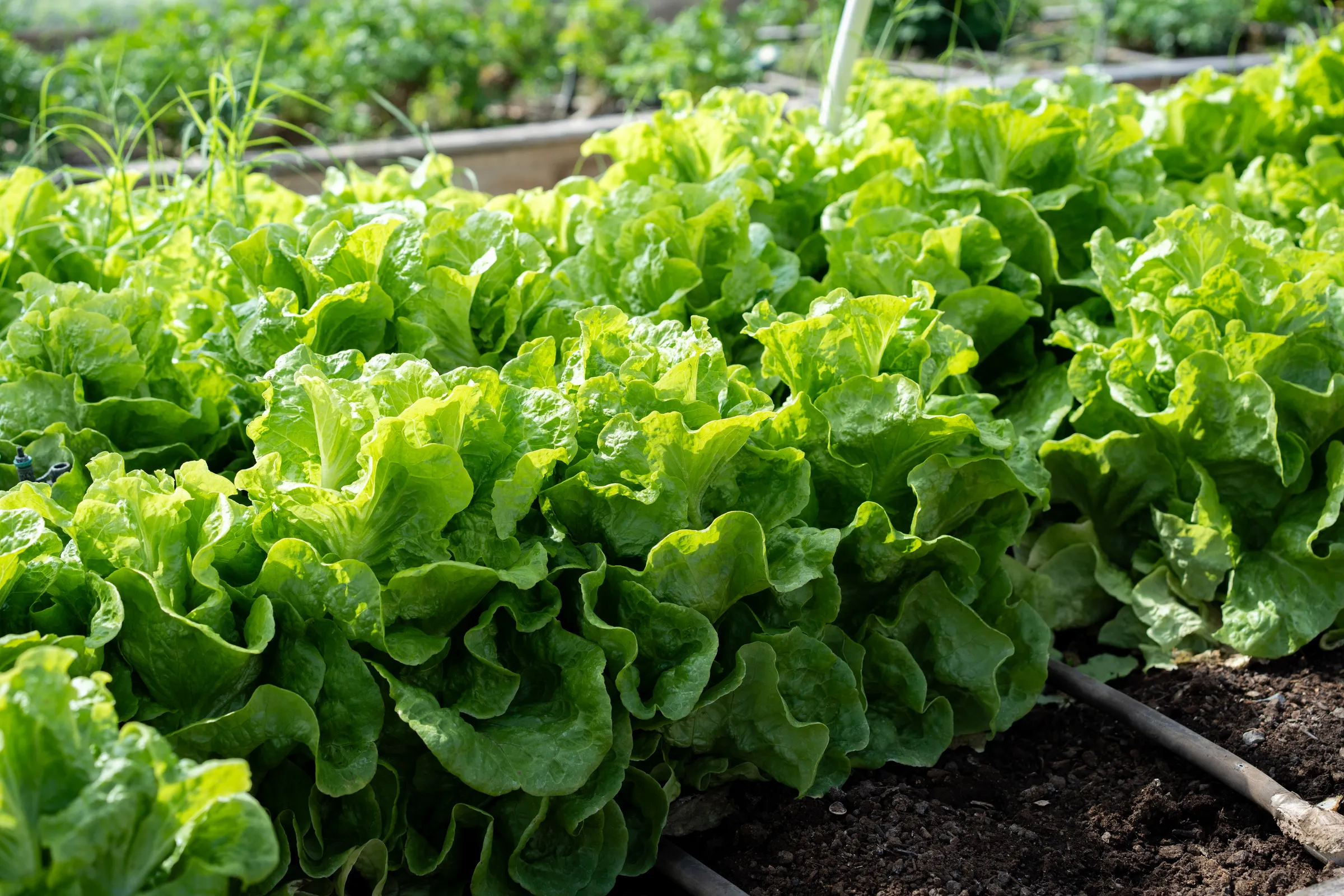
We grow using Korean Natural Farming, which treats pest pressure as a symptom of an unhealthy system rather than something you spray your way out of. The work goes into the soil and the plant: living soil full of beneficial microbes, fermented plant and mineral inputs, and conditions that let crops defend themselves. (You can read the full method in our guide to Korean Natural Farming.) It’s a different approach altogether: instead of spraying problems away and managing the residue afterward, we grow soil and plants healthy enough that they don’t need the spray in the first place. That’s the heart of what we mean by beyond organic. The single biggest exposure route in this whole story — the residue that comes from spraying crops with these chemicals — is one we simply never do.
That’s the quiet logic behind how we farm. The debate over any one chemical can drag on for decades — but you don’t have to wait for the verdict to act. You can start lowering your own exposure with your next trip to the market, just by paying attention to how your food is grown. On our end, we’ve taken the most direct step there is: we never use these chemicals in the first place.
This article is about your health. For what these same chemicals do to the soil, water, and land they’re sprayed on, read How Natural Farming Heals the Land, Air, and Sea.