In October 2014, I was sitting in my doctor's office reviewing routine bloodwork when he pointed at my PSA score and said it was in the red. My PSA had been creeping up slowly for years, and I'd been on what doctors call "active surveillance" — they were watching but not treating. The number had jumped. The cancer that had been Stage II was now Stage III, and the recommendations changed accordingly.
That moment in 2014 was the day my cancer got serious. But the journey actually started five years earlier. I was first diagnosed at Stage I back in 2009, and spent the years in between on active surveillance before things turned. I'm 84 now, still working on the farm, and I've been living with this for seventeen years. Some of what I've done is conventional. Some of it isn't. Moringa is part of the picture, not the whole picture and not the centerpiece. I want you to know what you're reading: this is not a cancer claim. It's the article I wish I'd had when I started looking. A straight read on what the research actually shows, with my own story at the end.
So let's start with the science.
What the Research Actually Shows
I've been adding to a folder of moringa-and-cancer papers since 2015. The reason I keep it open is that the research really has gotten more interesting over the last decade, and most of what gets written about moringa and cancer online hasn't kept up.
If you've searched "moringa and cancer," you've probably seen everything from "moringa kills cancer cells in a dish" (true, kind of) to "moringa cures cancer" (not true, please be careful). The real picture sits between those two, and the middle is where the interesting stuff lives.
Moringa Flips a Switch in Cancer Cells
Your body has a built-in cleanup crew. When a normal cell gets damaged or starts behaving strangely, the body has a way of gently telling it: time to retire. The cell, if it's working properly, agrees. This is one of the main ways your body prevents cancer from getting started in the first place.
Cancer cells are the ones that stopped listening. They've figured out how to ignore the retirement signal and just keep dividing.
What researchers keep finding, across a long list of cancer cell types, is that moringa's most active compound (moringin, also called MIC-1 in research papers) gets cancer cells listening to that retirement signal again. And it does that without bothering the healthy cells next door. That kind of selective effect is the whole goal of cancer drug research: hit the bad cells, leave the good ones alone (Molecules, 2021).
The list of cancers tested in cell-line studies now includes breast, colorectal, liver, lung, prostate, and kidney. Different research groups, different countries. The studies keep adding to the promising picture (Annals of Medicine and Surgery, 2025).
That's the lab data. The next question I had was the obvious one: does any of this still work in a living animal?
Three Animal Studies That Got My Attention
Mice with breast tumors (2020). I read this one twice. A research group fed moringa extract to mice carrying aggressive breast tumors. Three weeks later, the tumors in the moringa group were about 65% smaller than the tumors in the control mice (Lim et al., 2020).
Mice with kidney cancer (2021). Researchers set up two groups of mice with kidney cancer. One group got moringa's main compound. The other got a real kidney cancer drug that doctors prescribe today — same dose, same setup. Three weeks later, the moringa-compound group's tumors had shrunk roughly as much as the prescription-drug group's (Frontiers in Cell and Developmental Biology, 2021). A plant compound matching the performance of a prescription drug, at least in mice — that's the one that surprised me the most.
Mice with pancreatic cancer (2019). A research group tested whether moringa would interfere with radiation therapy or help it. They found it helped. Cancer cells that got both moringa and radiation died at a higher rate than cells that got either treatment alone (Integrative Cancer Therapies, 2019). This is the kind of result I want to see most — not moringa replacing the treatment, but the treatment working better because of it.
Three different cancers. Three different labs. Three different countries. That's not noise — that's a real pattern.
The Honest Limit
One thing I hold the line on, though: none of what I've walked you through has been tested in human cancer patients in a real clinical trial yet. Drugs that look transformative in mice routinely fail in people. Different bodies, different doses, different cancer biology. A 2022 systematic review covering more than two decades of moringa cancer research reached the same conclusion (Karimi, APJCB, 2022).
But I don't want to undersell what's there either. The honest tier name is "promising early evidence," not "anticancer treatment." Plant compounds matching a prescription drug in mice is a result worth taking seriously.
One Important Caveat About Chemotherapy
There's one study that complicates the picture, and it's worth being precise about.
In 2021, a research team at Pennington Biomedical gave moringa seed extract to mice that were both obese and being treated with chemotherapy for an aggressive breast cancer. They wanted to see whether moringa would help the chemo or interfere with it. What they found: the mice that got moringa and chemo together had tumors that grew bigger than either treatment alone (Zunica et al., 2021).
The researchers put a warning right in the paper, their words: "We caution patients about consuming moringa oleifera products while receiving chemotherapy for breast cancer treatment."
The scenario is narrow. Moringa seed extract specifically (not leaf), one particular kind of aggressive breast cancer, obese mice, all of it given at the same time as the chemo. It's not a universal warning. But it's a real published result, and if you're considering moringa during active chemotherapy, that conversation needs to include your oncologist.
What This Means If You're Considering Moringa During or After Cancer
Here's how I'd put the practical picture together.
Seventeen years in: my story with cancer and moringa
That's the science. Here's the personal part. This is mine, not the farm's.
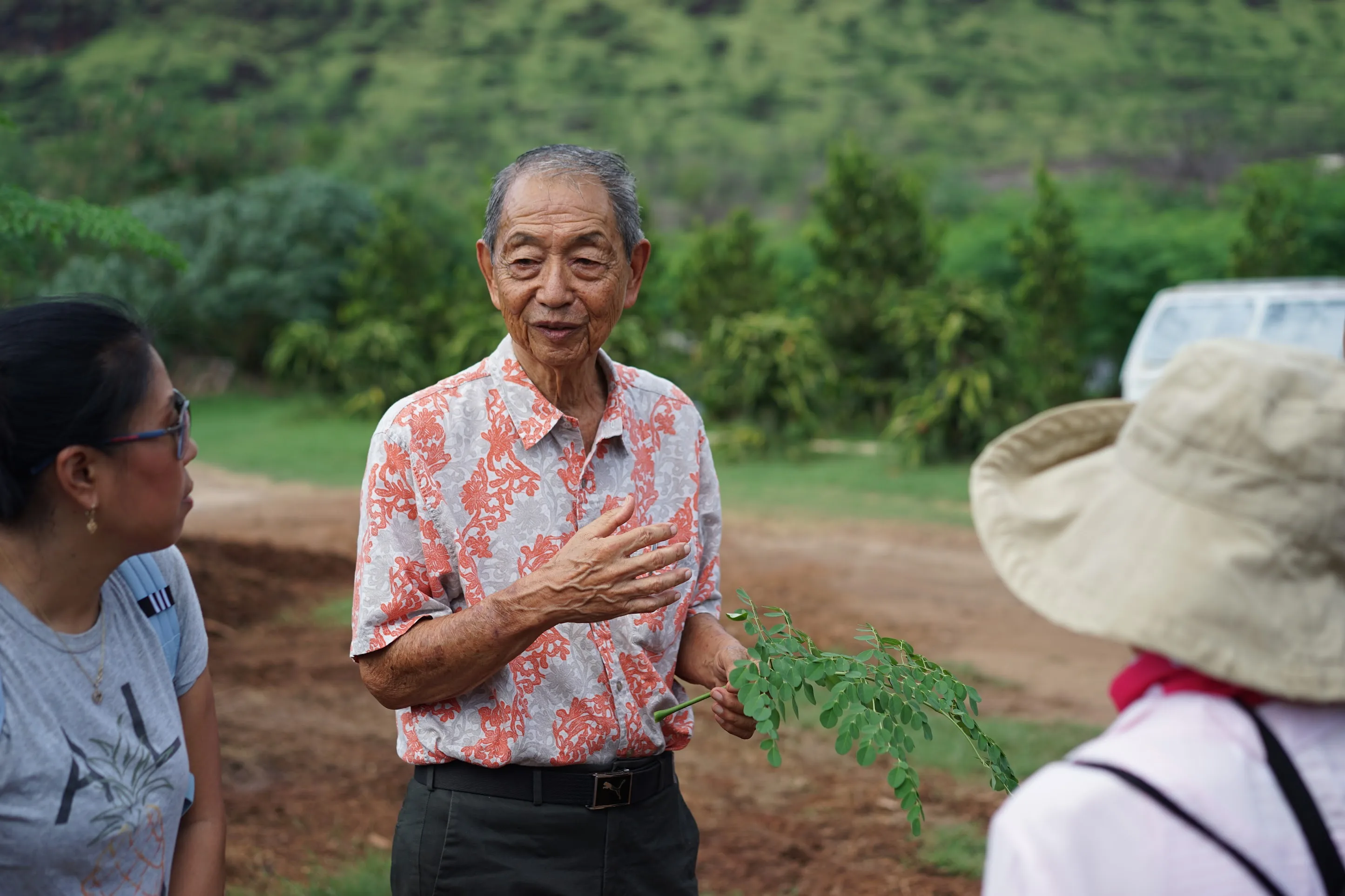
I was first diagnosed with prostate cancer back in 2009. It was Stage I at the time — found during routine bloodwork, and it's been part of my life ever since. For the next five years I was on what doctors call active surveillance: they watched, but didn't treat. The cancer crept along from Stage I to Stage II, and we continued to actively monitor it. Then in October 2014, a routine check showed my PSA had jumped, and the cancer had moved from Stage II to Stage III. Suddenly the conversation was about treatment, not monitoring.
My younger brother is an excellent oncologist. He laid out the conventional plan for me: surgery, chemotherapy, radiation. He had a team ready to go. He kept repeating one line: "Every day you're waiting to get treatment, you're dying."
I love my brother. He's a successful oncologist, and I trust him completely. But after weeks of sitting with it, I made a different call — I decided to lean on what I'd spent decades learning about how to grow life.
Korean Natural Farming is built on a simple idea: healthy soil and beneficial microbes do most of the work, and the farmer's job is to set up the conditions for the system to thrive. I'd watched that approach transform my farm. I'd also been learning about how much of our human health depends on the gut microbiome, and how closely it's tied to the soil microbiome I'd been building under my feet for years. The same kind of microbial relationships that drive a healthy farm seemed to be at work in a healthy body. So in March 2015, I went to an integrative cancer program in Korea that focused on boosting the body's ability to heal itself. I came home with a discipline I kept up for the next eight years, and I felt good.
In 2023, the cancer spread to my hips and spine — Stage IV. I tried a conventional drug for about a year. The labs said it worked. But it left me feeling like a different person, and I made the call to go off it. My energy and positivity came back and I'm feeling great. I still work full time on the farm, and I even went skiing this year — at 84.
I want to be honest about where I am: cancer is doing what cancer does. After being stable for years, my PSA has climbed recently. What I'm doing now is, in a lot of ways, a quality-of-life decision and a belief that the body can heal itself if we can empower the body to do so. The conventional drug worked on the cancer, but the version of me on it wasn't a version I wanted to keep being. So I'm working with practitioners who focus on supporting the body's own healing systems, rather than attacking the cancer with drugs that take more from me than they give back. I'm not anti-medicine. I tried it. I'm choosing what I'm choosing with my eyes open.
Where Moringa Fits
Moringa is part of what I do. Not the whole thing — not even close. I take it alongside everything else I do for my health: clean eating, exercise, the practitioners I work with. I'm not claiming moringa is treating my cancer. I don't know that. Nobody knows that.
What I do believe — and the research backs this up — is that moringa is more than just nutrient-dense. Its main compound, moringin, is genuinely active in the body. It feeds into the same anti-inflammatory and cellular-cleanup pathways that researchers keep linking to long-term health and cancer-risk reduction. That's a more grounded claim than "moringa cures cancer," but it's the one the science actually supports.
To Anyone Reading This Who's Going Through Something Similar
A few things, from someone who's been at this a while.
Talk to your medical team. Read the research yourself — not the headlines, the actual papers. Don't take anyone's word for what you should do, including mine. Especially mine. I made a choice that's right for me; I'd never tell you it's right for you. The choice is yours.
And if you do decide moringa is part of your picture: know where it came from. The reason I trust our moringa is that I know exactly how it was grown and how it was dried, and I believe it's the purest and most potent moringa on the market. That matters to me. It might matter less to you, or you might find that same trust somewhere else. Either way, make sure you know what's in the bottle.
The honest part is making your decision with your eyes open. Knowing what you're saying yes to and what you're saying no to. Trusting yourself enough to choose, and staying curious enough to keep learning as the evidence — and your own life — changes.
After all this time, that's still the most useful thing I know.
— David
Frequently Asked Questions
Does moringa cure cancer?
No — but the evidence is more encouraging than that "no" might suggest. Moringa has shown promising results in cells and animals across multiple cancer types, and the research keeps adding to the picture. It just hasn't reached human clinical trials yet. So: promising direction, not proof.
Can moringa help with cancer?
The honest answer is "we don't know yet." Lab and animal studies show moringa compounds can encourage cancer cells to shut themselves down while leaving healthy cells alone, and animal studies have shown tumor reduction in breast, kidney, and pancreatic cancer models. But none of that has been confirmed in human clinical trials. Moringa is good nutrition. Calling it a cancer treatment goes further than the evidence supports.
Is it safe to take moringa during chemotherapy?
Talk to your oncologist before adding moringa to any active treatment plan. There's a published 2021 study showing that moringa seed extract worsened tumor progression when given alongside chemotherapy to mice with a specific aggressive breast cancer. The researchers cautioned against combining moringa with chemo for breast cancer. The scenario in the study was narrow, but the result is real, and the safest approach during active chemotherapy is to keep moringa out unless your oncologist clears it.
What kinds of cancer has moringa been studied for?
In lab and animal studies: breast, colorectal, kidney, liver, lung, pancreatic, and prostate cancers. Most of the studies point in the same direction (cancer cells responding, tumors shrinking), with one important exception worth knowing about: a 2021 mouse study found that moringa seed extract worsened tumor progression when given alongside chemotherapy for an aggressive form of breast cancer. None of these results have been confirmed in human clinical trials yet.
What is moringin (also called MIC-1)?
Moringin is moringa's most active compound — the same one that does most of the anti-inflammatory work in moringa more broadly. (You may see it called MIC-1 in research papers; it's the same compound under a different name.) In cancer cell studies, moringin appears to encourage cancer cells to shut themselves down (a process called apoptosis), while leaving healthy cells alone. It also seems to work through the same anti-inflammatory pathways that drive moringa's other documented effects.
Are there any cancer-related drug interactions with moringa?
Yes. The most important is the chemotherapy interaction described above. Beyond that, moringa can interact with thyroid medication, diabetes drugs, blood pressure medication, and blood thinners — all of which may overlap with treatments cancer patients are on. Always tell your oncologist about anything you're adding.
What about hormone-sensitive cancers?
If you have an estrogen-receptor-positive or other hormone-driven cancer, talk to your oncologist before adding moringa. Plant compounds can interact with hormone-driven biology in ways that haven't been fully studied for moringa specifically, and that's exactly the kind of judgment call that belongs with your care team.
How much moringa should someone in cancer recovery take?
There's no special "cancer dose" for moringa supported by evidence, so we'd recommend the same as anyone else taking moringa for nutrition: 4 capsules daily, which is about 1.5 grams of leaf powder. There's no evidence that taking more helps. (Separate point about what kind of moringa product to take during cancer treatment: the 2021 study that found a negative interaction with chemotherapy used a concentrated moringa seed extract, not regular leaf powder. Leaf products are the safer assumption during treatment — but again, this is a conversation to have with your oncologist.)
Which part of the moringa plant has the anti-cancer compounds?
The leaves and bark show the strongest activity in lab studies, mainly because of MIC-1 and related compounds. The seeds also contain MIC-1, but the 2021 chemotherapy interaction came specifically from seed extract — so during cancer treatment, leaf is the safer assumption. (Our products use leaves and seeds, never root material.)
Should I stop my cancer treatment and try moringa instead?
No. Please don't. Moringa has not been shown to treat cancer in humans, and stopping a treatment your oncologist has prescribed is a serious decision that should never be based on lab studies in mice. Moringa, if it has a role at all in a cancer journey, is one piece of a broader picture — alongside, not instead of, the conversation with your medical team.
Sources
Reviews
- Moringa oleifera Lamarck (1785), Moringaceae and Cancer I: A Systematic and Comprehensive Review of 24 Years of Research — Karimi, APJCB 7(1) (2022)
- Harnessing the Anticancer Potential of Moringa oleifera — Annals of Medicine and Surgery (2025)
- Anti-Cancer and Medicinal Potentials of Moringa Isothiocyanate — Molecules (2021)
In Vitro (Cell Line) Studies
Animal Model Studies
- Decreased Expression of CaN, VEGF, SLC39A6 and SFRP1 in MDA-MB-231 Xenograft Breast Tumor Mice Treated with Moringa Extracts — Lim et al. (2020)
- MIC-1 Inhibits Renal Cancer Growth via PTP1B/Src/Ras/Raf/ERK — Frontiers in Cell and Developmental Biology (2021)
- Combined Effect of Moringa oleifera and Ionizing Radiation on Pancreatic Cancer — Integrative Cancer Therapies (2019)